Department of Chemical Engineering · University of Patras

Pencil sketch portrait of Georgios G. Vogiatzis

Georgios G. Vogiatzis

Assistant Professor of Computational Physical Chemistry

Developing new simulation methods to link the microscopic structure of polymers, glasses, nanocomposites and surfaces to their macroscopic properties.

Explore the research Publications ORCID

Research

The work sits at the interface of physical chemistry, polymer physics and computational materials science. Its common thread is the development of new simulation methods and codes: four fundamental directions provide the methods, and four applied directions put them to work on materials.

Fundamentals and methods

Simulation methods and concepts that reach the long times, the deformed states and the system sizes that brute-force atomistic simulation cannot.

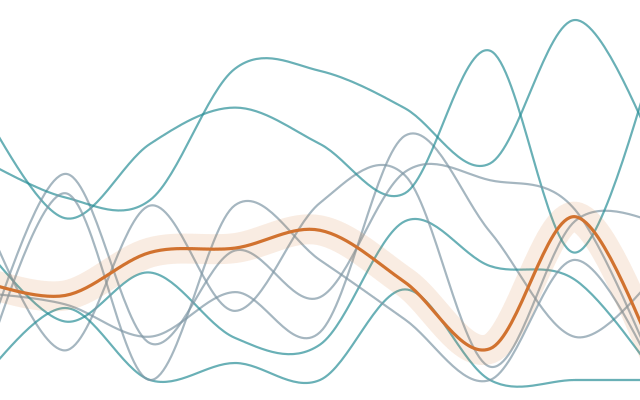
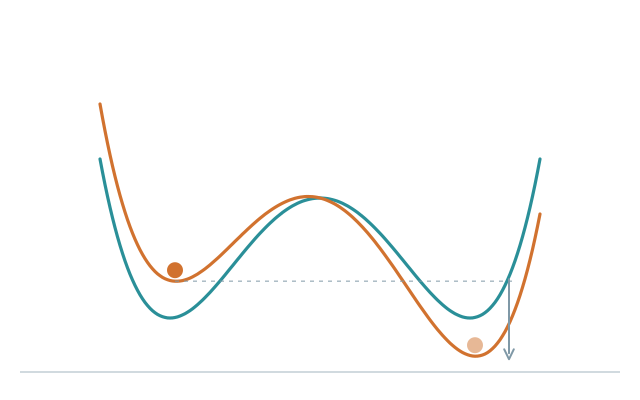
Potential energy landscape exploration

The slow dynamics of a glass is a sequence of jumps between minima of its potential energy surface. Methods are developed to locate these minima and the transitions connecting them, and to follow how a glassy polymer moves among them as it is deformed.

Key papers Tracking a glassy polymer on its energy landscape in the course of elastic deformation (Mol. Phys., 2013) · Structural transitions in glassy atactic polystyrene using transition-state theory (J. Phys. Chem. B, 2021)
Long-time dynamics and temporal coarse-graining

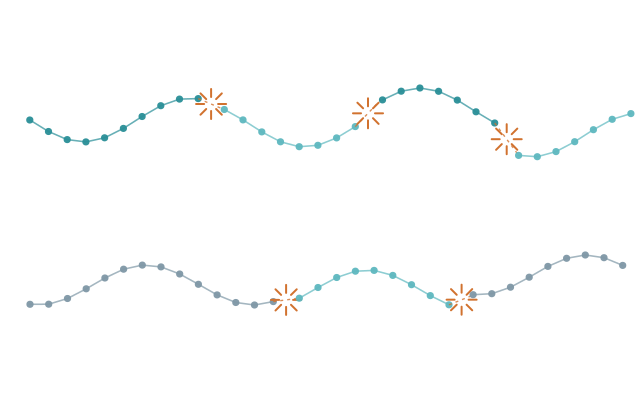
Glass relaxation and aging unfold over times far beyond the reach of direct molecular dynamics. Transition-state-theory and network-based frameworks coarse-grain the dynamics in time, replacing the atomistic trajectory by transitions between a network of states.

Key papers Network dynamics: a computational framework for the simulation of the glassy state (Mol. Syst. Des. Eng., 2023) · Network topology of the states probed by a glassy polymer during physical aging (Macromol. Theory Simul., 2019)

Deformation thermodynamics

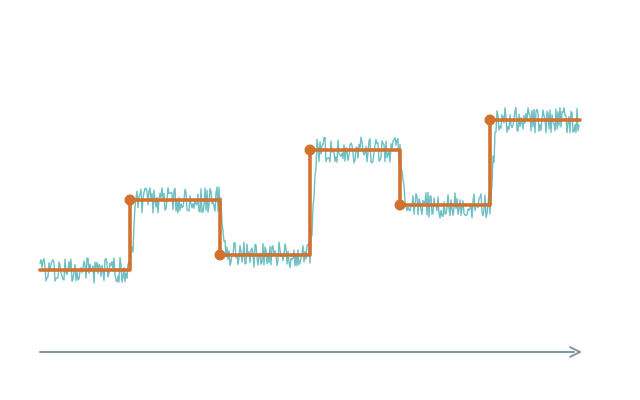
Deformation changes the free energy of a glass and the states it can visit. Free-energy calculations on deformed polymer glasses, and the identification of the microscopic carriers of plasticity, link the structural transitions seen in simulation to the thermodynamics of deformation.

Key papers Free energy calculations by molecular simulations of deformed polymer glasses (Comput. Phys. Commun., 2020) · Microscopic carriers of plasticity in glassy polystyrene (Macromol. Theory Simul., 2021)

Spatial coarse-graining and reverse mapping

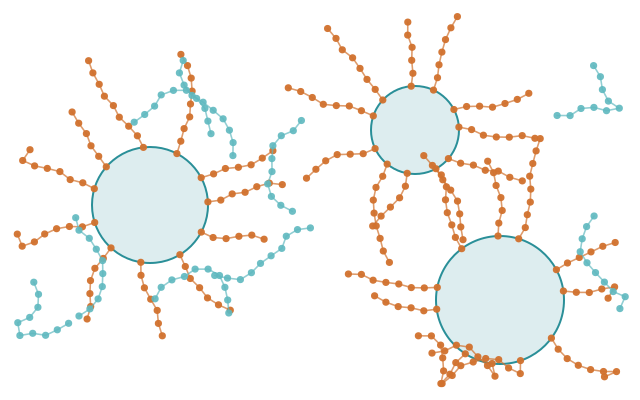
Systems that are too large or too slow for atomistic simulation can be equilibrated with coarse-grained models, and atomistic detail is then restored by reverse mapping. The approach has been applied to polystyrene (PS) systems: all-PS nanocomposites, PS/C60 mixtures and PS/silica nanocomposites.

Key papers Monte Carlo simulations of a coarse grained model for an athermal all-polystyrene nanocomposite system (Eur. Polym. J., 2011) · Local segmental dynamics and stresses in polystyrene–C60 mixtures (Macromolecules, 2014)

Materials and applications

The methods put to work on materials problems, from glasses and entangled melts to polymers exposed to their environment and nanocomposites.

Entangled melts and mesoscopic dynamics

Entanglements control how long-chain polymers flow, yet they are out of reach for brute-force atomistic simulation. The work centres on developing slip-spring models that capture entanglement effects with thermodynamically consistent mesoscopic simulations, and on the open-source code that implements them.

Key papers Equation of state based slip spring model for entangled polymer dynamics (Macromolecules, 2017) · Slip spring-based mesoscopic simulations of polymer networks (Polymers, 2018)

Degradation, sorption and thermal transport

How do polymers respond to their environment? A new simulation framework for chemical degradation in polymeric solids is complemented by studies of CO2 sorption in molten polystyrene and of how the thermal conductivity of amorphous polymers depends on molecular weight.

Key papers Simulation framework for the chemical degradation in polymeric solids (J. Phys. Chem. A, 2026) · Thermal conductivity of amorphous polymers and its dependence on molecular weight (Polymer, 2021)

Structure and dynamics of polymer nanocomposites

The properties of a polymer-matrix nanocomposite are largely decided at the polymer–solid interface. Atomistic simulation, coarse-graining and mesoscopic methods are combined to follow these materials from the local structure of adsorbed and grafted chains, on silica, graphite and fullerene surfaces, up to bulk behaviour.

Key papers Multiscale simulations of PS–SiO2 nanocomposites: from melt to glassy state (Soft Matter, 2016) · Multiscale molecular simulations of polymer-matrix nanocomposites (Arch. Comput. Methods Eng., 2018)

About

Georgios G. Vogiatzis is an Assistant Professor of Computational Physical Chemistry in the Department of Chemical Engineering at the University of Patras, Greece. The research centres on developing new molecular simulation methods, and on applying them to understand how the microscopic structure and dynamics of soft and glassy materials give rise to their macroscopic properties.

Georgios earned a PhD in Chemical Engineering from the National Technical University of Athens (NTUA) in 2015, supervised by Prof. Doros N. Theodorou and supported by a doctoral scholarship from the Alexander S. Onassis Public Benefit Foundation. Postdoctoral positions at NTUA and Eindhoven University of Technology (TU/e) followed, as well as a period as a researcher at Solvay and teaching appointments at the University of Thessaly. Georgios was project leader of a Dutch Polymer Institute collaboration project, started in 2019, that funded a PhD position at TU/e and a postdoctoral position at NTUA.

Career & education timeline

Position
Assistant Professor of Computational Physical Chemistry
Affiliation
Section of Chemical Technology & Applied Physical Chemistry, Department of Chemical Engineering, University of Patras
PhD
Chemical Engineering, NTUA (2015)
Interests
Computational physical chemistry (ab initio and molecular simulations), polymer science and nanotechnology, parallel programming for multicore, cluster and heterogeneous systems
Tools
Fortran, C/C++, Python; MPI, OpenMP, CUDA